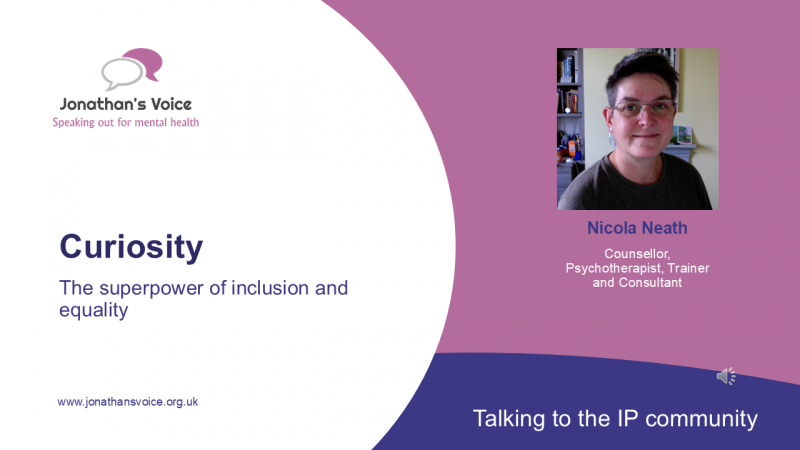
The latest video in the Jonathan’s Voice Self-Help Video series explores a powerful mindset that can help us create more inclusive and thoughtful IP workplaces: curiosity.
In Curiosity – the superpower of inclusion and equality, Nicola Neath explores how curiosity enables us to recognise the assumptions, biases and emotional reactions that influence the way we engage with others.
Curiosity is not simply about asking questions. It is about developing the ability to pause, notice and remain open when we encounter difference or discomfort.
In this video Nicola explores several important ideas, including:
Recognising bias and prejudice
Curiosity helps us step back from automatic assumptions. By noticing our reactions and asking ourselves what might be influencing them, we create space to engage more openly with others.
Understanding the role of fear and shame
Many of our responses to differences are shaped by fear, shame or inherited beliefs about how we should think or behave. Curiosity allows us to observe these reactions rather than being driven by them.
Emotional safety and the nervous system
Our ability to stay curious is closely connected to how safe our nervous system feels. When we feel threatened or defensive, curiosity can disappear. When emotional safety is present, curiosity becomes possible.
Curiosity as an ethical stance
Curiosity can be practised as a deliberate, non-defensive approach to engaging with ourselves and others. It helps us remain open, reflective and respectful when navigating differences.
In professional environments like IP where pace and pressure can limit reflection, cultivating curiosity can support more thoughtful conversations and more inclusive workplaces.
You can watch the full video here:
If you find the video helpful, please consider sharing it with colleagues or within your organisation.
We’d love your feedback: please fill in the short form here or email us at feedback@jonathansvoice.org.uk